

The Denazification Narrative
An analysis of Russian political rhetoric in the Ukrainian conflict

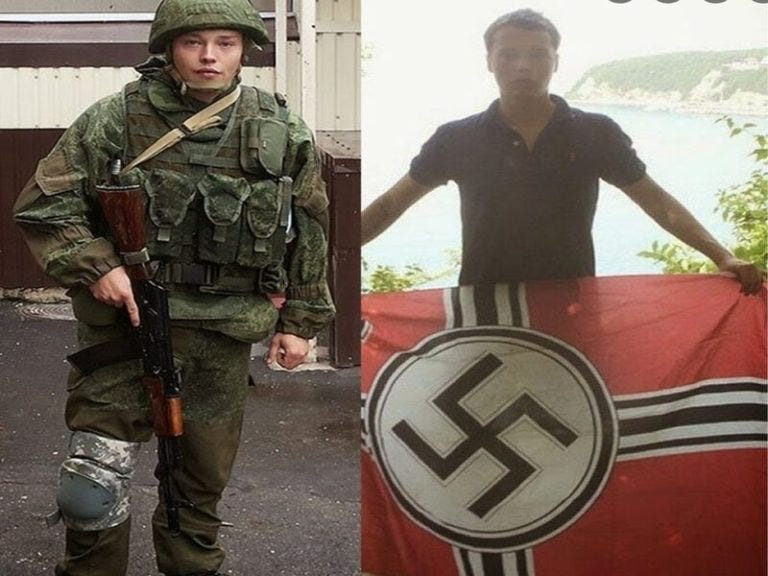
Since the beginning of the invasion of Ukraine in 2022, the Russian Federation has adopted as one of its main justifications the objective of "denazifying" the country. This narrative caused international perplexity, especially considering that the Ukrainian president, Volodymyr Zelensky, is Jewish and there is no evidence that the current Ukrainian government adopts neo-Nazi policies. The apparent contradiction, however, reveals a deeper logic: the redefinition of historical terms for ideological and propagandistic purposes.
This article aims to investigate the foundations of the Russian denazification narrative, identifying its connection to the expanded concept of "Russophobia" and its instrumentalization as a tool of psychological warfare. A central piece of Russian rhetoric about the war in Ukraine is the ambiguous notion of “denazification.” However, Russian nationalist thinkers like Aleksander Dugin offer an explicit ideological reformulation of what this means in the current context: the eradication of Russophobia.
According to Dugin, to understand the rationale behind the Russian military operation, which he calls the “Northern Military District,” it is necessary to recognize that “Ukrainian Nazism” does not refer to classical symbols or ideologies, but to institutionalized Russophobia. In his words: “Russophobia is the hatred of Russians because they are Russians, building a policy on that hatred and carrying out certain actions, including violent ones... If we understand denazification as Russophobia, then there is no longer any need to prove that in Ukraine ‘everyone is a Nazi’.”
This interpretation has profound implications. Dugin argues that, just as Jews define anti-Semitism, it is Russians who must define what Russophobia is. Thus, the identification between Nazism and Russophobia becomes not only a rhetorical construction, but a basis for state and military action. The ultimate goal of the war, according to this logic, would not be merely to eliminate individuals or neo-Nazi groups, but to eradicate any political, cultural, or symbolic manifestation that could be interpreted as hostile to Russian identity.
Furthermore, Dugin extends the concept of Russophobia beyond Ukraine’s borders, accusing NATO, the European Union, the United States, and even Russian and Ukrainian liberals of sharing this sentiment. This reveals an ideological expansion project, where "denazification" becomes a potential justification for future actions against any country or group that opposes the Russian geopolitical project.
This redefinition of “Nazism” as “Russophobia” empties the term of its historical meaning, transforming it into a propaganda instrument. The criticism is no longer anchored in objectively identifiable racist or totalitarian ideologies, but in subjective perceptions of hostility toward the Russian people, which paves the way for the criminalization of dissent, the national self-determination of neighboring countries, and internal opposition within Russia itself.
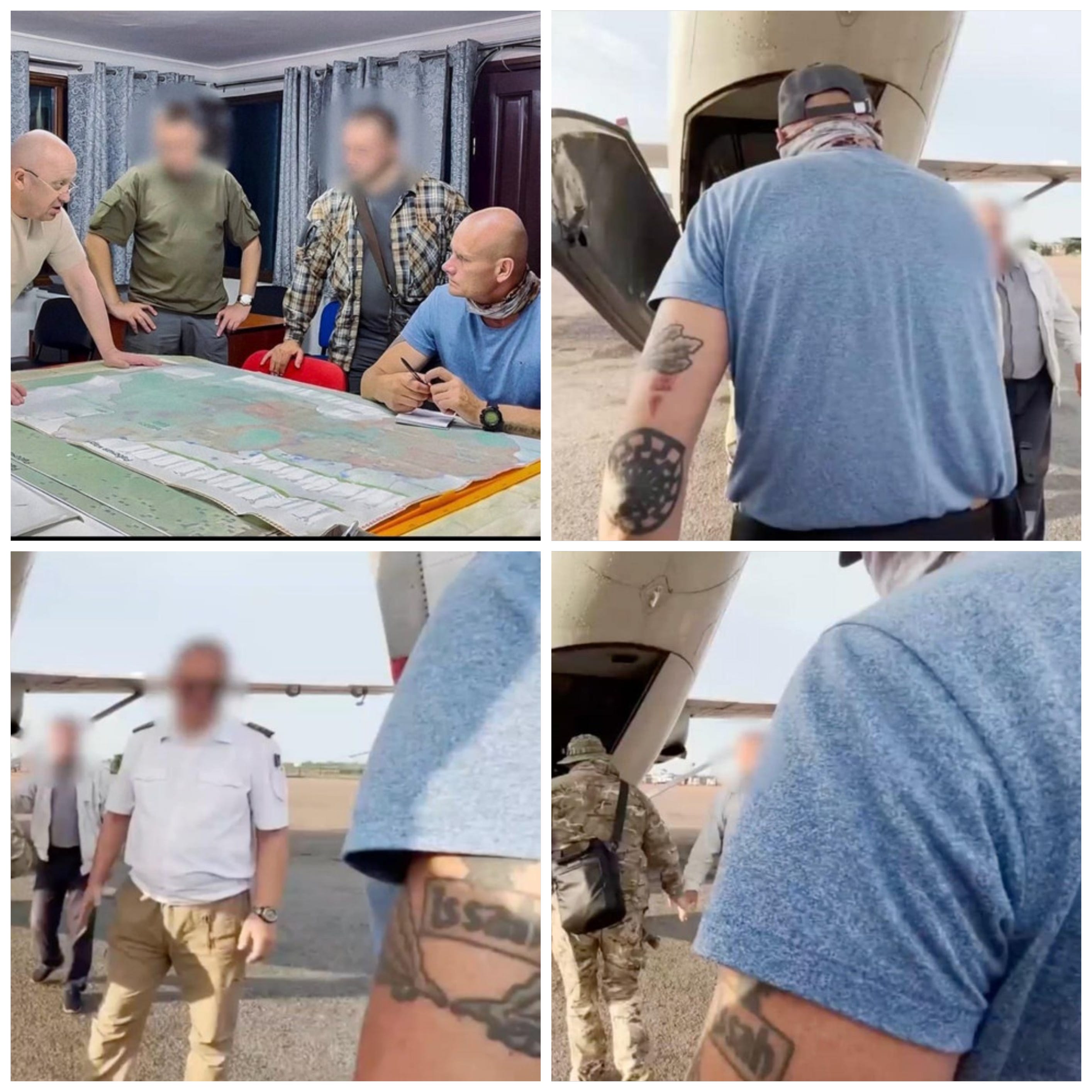
The use of the word “Nazi” to describe the Ukrainian government also reveals internal contradictions in the Russian discourse. Neo-Nazi elements also exist within Russia itself. Dmitry Utkin, founder of the Wagner Group, had Nazi tattoos, and the group’s name refers to Richard Wagner, Adolf Hitler’s favorite composer. Other groups, such as Rusich, associated with neo-Nazism, act as mercenaries in operations for the Russian state.
The rhetoric of denazification, therefore, does not reflect a real commitment to combating Nazism, but rather an attempt at symbolic mobilization. By assigning this label to Ukraine, the Kremlin constructs a simplified morality in which Russia is the liberator and every opponent is automatically a fascist.
The appropriation of symbols and manipulation of language are common practices in authoritarian regimes. Soviet propaganda, for example, used the label “fascist” for any political opponent, especially during the Cold War. Similarly, the German Nazi regime used the figure of the Jew as a symbol of degeneration to justify persecution and genocide. Present-day Russia resumes these methods.
The narrative of “denazification” not only dehumanizes the enemy, but also seeks to consolidate internal support and delegitimize any external criticism. It is a strategy that operates on multiple levels: psychological, diplomatic, and military. By reactivating historical archetypes with great emotional weight, the Kremlin reinforces the sense of existential threat among its population and justifies aggressive actions as national defense.
The narrative used by the Russian Federation as justification for the invasion of Ukraine reveals itself, in light of critical analysis, as a strategic ideological construction, disconnected from the historical and conceptual parameters of classical Nazism. The redefinition proposed by figures like Aleksander Dugin, in which “Ukrainian Nazism” is equivalent to “Russophobia,” transforms a historically specific concept into a highly subjective and manipulable category. Such semantic elasticity allows Russia to frame any resistance to its geopolitical influence as a manifestation of extremism, justifying military actions under the guise of a moral imperative.
This discursive operation, far from representing a legitimate concern with combating extremism, is part of a broader project to reconfigure the symbolic and political boundaries of the post-Soviet space. By activating historical memories and emotional archetypes, the Kremlin not only strengthens its internal cohesion but also seeks to destabilize the international discursive field, shifting the geopolitical debate to a morally charged and rhetorically shielded terrain.
Reference
DUGIN, Aleksander. Alexander Dugin: Russophobia and Nazism. Izborsk Club, May 11, 2022. Available at: https://izborsk-club.ru/22747